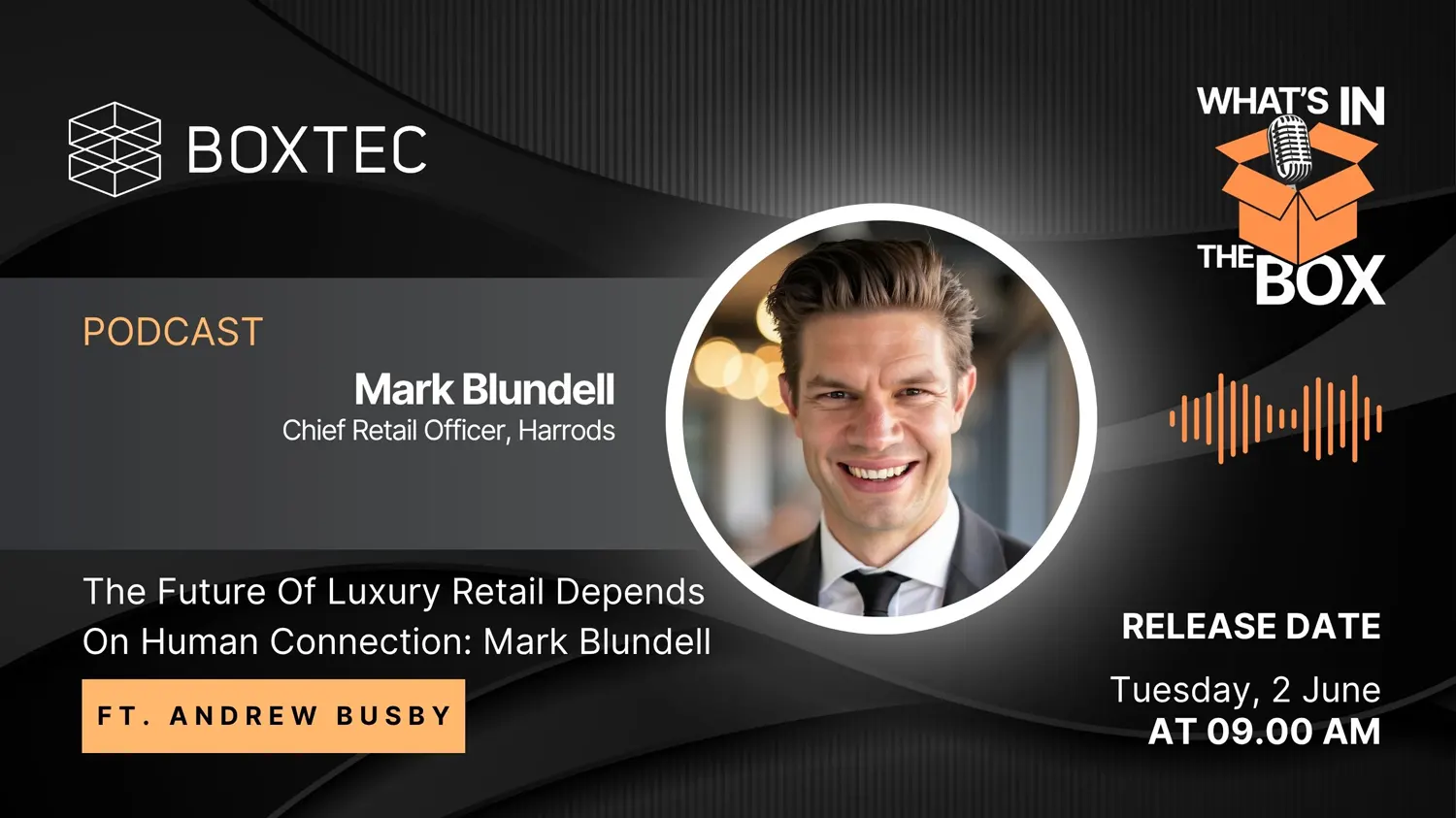
Published: 02 June 2026
Summary
We talk through what luxury customer experience really means at Harrods, from serving 15 million visitors a year to delivering seamless service for ultra-high-net-worth clients. We dig into why relationships outlast products, how data supports great personal shopping, and why the human touch still wins even as AI accelerates.
- The reality of an “eclectic” Harrods customer base across tourists, locals, celebrities, and royal families
- What VIP clients expect and why predicting needs matters
- How “client telling” evolves from personal notes to shared systems and living customer data
- Why loyalty comes from relationship strength rather than product access
- The role of frontline colleagues, continuity, and talent retention in luxury retail
- Post-COVID luxury rebound leading to complacency and renewed pressure for innovation
- The shift from transactional retail to experiences, services, and lifestyle integration
- A practical view of AI in retail across efficiency, customer behaviour, and luxury translation
- Why Harrods keeps humans at the centre of the brand experience
Transcript
Host: 00:03
Okay, fine. So Mark, we’re here on stage at the Retail Technology Show, and we’ve got a packed house who want to hear all there is to know about what’s going on these days at Harrods. So let’s start off, we’re going talk a bit about the customer, the customer experience and how that is in luxury, what it means for Harrods, but let’s kick-off first with the customer. Now, how would how would you describe it? Is there a typical Harrods customer?
Mark Blundell: 00:38
No, we’ve got 15 million of them. That’s how many come through our door every single year. So they range from the occasional tourist all the way through to our local affluent customers. We’ve got a huge amount of customers within the square mile for whom this is their corner shop, not that corner shop if you live locally, all the way through to we do have the odd celeb who comes and visits us, and we also have the world’s ultra-high net worth, and we also cater for over 20 royal families as well. So it’s eclectic at any given moment.
Host: 01:18
So those celebs and the royal families, presumably you don’t let them just wander around a store on their own. Do you know we used to call it “client telling” I’m not sure we use that term anymore. You look after them, presumably.
Mark Blundell: 01:32
We do, but many of them, I mean, it’s many of them just you know, retailing social. So part of what a lot of our clients enjoy is walking the shop floor. So that they will often make some requests about that. Can we come in before we open or can they come in afterwards? It’s a nightmare on both fronts if we do that. But they actually are very, very happy to walk the corridors of the store. I mean, it’s massive, it goes seven floors up, it goes seven floors down. It’s relatively easy to be incognito, unless you’re an influencer, and then they’re quite happy to be not in incognito, actually. So it’s funny that the more famous or the more royal they are, the more incognito they are, the sort of the more influencer they are, then they have entourages, put it that way.
Host: 02:21
Yeah, yeah. Now I’m reasonably familiar with the store. I’ve been, you know, I’ve had a tour and so forth, been up onto the roof and all this sort of thing. But you mentioned there just briefly seven floors down.
Mark Blundell: 02:34
Yes.
Host: 02:34
So what’s down there?
Mark Blundell: 02:36
We have stock rooms, we have entire production kitchens, all the food that we make in our food halls that’s produced underground. We’ve got big kitchens underneath there, there’s car parks underneath there. It’s quite a magical mystery tour. You haven’t been on the full tour, clearly.
Host: 02:53
Yeah, obviously. I need to go back and have a proper look.
Mark Blundell: 02:57
It’s very, very interesting. Yes, and, eight years in, I still get lost.
Host: 03:03
Yeah. So thinking about, you’re known probably as the leading luxury retailer, you know, the brand is so strong. Thinking about those VIP customers, what are their expectations when it comes to, you know, we’re in retail, we’re constantly talking about customer experience. And I guess it means different things to different people, but for your VIP customers, what does that mean?
Mark Blundell: 03:34
It means that we need to know everything about them. And not only do we need to know everything about them, we need to be able to predict their needs as well. So, I mean, table stakes in retail is you know someone’s name, you know their date of birth, you know where they live, and you’re able to use that fairly simplistic information to personalise a sense of experience for that customer. When you’re dealing at the very top of the pyramid, you need to know that information. You need to know what products they like, what brands they like, what brands they don’t like, where they go on holiday, where they don’t like going on holiday, which restaurants they eat in, which theatres they frequent, you need to know their children, you need to know the names of their children, you need to know their children’s birthdays, you need to know that when they come and visit you, how they like their coffee. Do they drink alcohol, do they not drink alcohol? If they drink alcohol, what cocktail do they like? You need to know absolutely everything about them in order to make it a really seamless experience. So if you consider that particular client, they go from first-class lounges in airports through to penthouse suites in hotels. When they come to Harrods, we just need to make sure that they are getting that seamless level of experience that they get everywhere else.
Host: 04:52
That’s amazing that you need to know all of that. What sort of strategies do you employ? what can you share with us?
Mark Blundell: 05:10
It’s a combination of tech and it’s a combination of human. So historically, how we would deal with that is we would for all of those clients have individual shoppers who work with them. In fact, our really top clients will have groups of shoppers, so the three or four people for continuity who they constantly see and consistently work with. And normally we would note that information down in little black books, you know, but we have evolved from that. So what we will do is not only have the information they share with them, but we observe cues through our shoppers and they’re able to note them down. We have systems, they note them down, they sit on it, they sit on a database, which means that when the customer comes to visit us, whoever their touch point is with, whether that’s with their shopper or the person who works front of house, they know exactly who that client is and what that client’s looking for. So we have a rich data source on that client, but it’s constantly evolving because as human beings, we change our mind. You know, the restaurants we used to like aren’t the ones we necessarily like today, and so it’s keeping that dynamic and making sure it’s as up to date as possible so that client’s getting the best experience.
Host: 06:18
Let’s talk about loyalty. So in the writing that I’ve done over the years, I’ve quite often said there’s no such thing as loyalty anymore in retail. You know, it doesn’t exist. Maybe for Apple, because we all know them; who’s got an iPhone in their pocket? Yes, about three-quarters of you. And I bet if you went down Regent Street and walked into the Apple store and they punched you in the face, you would still love your iPhone, love Apple. You know, so hats off to them. But what is it, what does loyalty mean for Harrods and for these high net worth customers?
Mark Blundell: 06:53
Well, it has to go beyond the product, because to your point, loyalty is dead because you can get product pretty much anywhere you want. It’s all absolutely interlinked with the strength of the relationship we have back with that client. So some of the things I’ve described demonstrates how well we know our clients, but we’ve got clients who shop with us, particularly at the tip of the pyramid, who generations of those clients have shopped with us. So, I think our longest serving client, we’re on fourth generation of that client who shopped with us. But it’s we’re there for them. We’ll we’ve got a very high international client base. Not only do we serve them here when they’re on UK soil, we’ll go out and visit them in their homes, in their territories, we’ll host dinners for them. We just recently hosted a dinner over in Saudi. We’re currently in Shanghai at the moment with one of our top clients hosting dinners, hosting occasions. It’s being in and around the client on things that matter to them, that go beyond the product. Because if it’s just purely product-based, you know, there’s people who can compete in that space. Where they struggle to compete is in that longevity of relationship.
Host: 08:08
Yes. And I guess that also means that the frontline workers at Harrods have got to be incredibly good at what they do.
Mark Blundell: 08:19
They are they’re a dying breed, though. It’s a tough gig working in shop retail. You know, if you really boil down what we’re asking people to do, it’s to work in a beautiful store, but it is covered in marble. And if you ever stand on marble for over nine hours a day, it’s pretty exhausting. It’s antisocial. So it’s late nights, it’s weekends, it’s working Easters, it’s Christmases, it’s working all sorts of occasions. But we have an incredibly loyal workforce and incredibly professional workforce as well. So we like to treat our colleagues brilliantly as well. We’re not perfect, but we do our level best. But yes, retaining talent is definitely where we are, and that’s what builds the loyalty because one of the things that the clients, again, the clients at the very top of the pyramid like to see is continuity of people. They hate coming in saying, well, who are all these people around me? Because your relationship with that client’s built on trust, trust’s built over time, and if you’re constantly seeing different people in your environments, then the trust starts to waver a little bit. So we work incredibly hard to make sure that our colleagues who serve these clients are there and looked after as well.
Host: 09:32
Yes, yes. Leading off on that point, I guess in the luxury sector, do you see any pitfalls or mistakes when people not quite executing it in the way that they might?
Mark Blundell: 09:46
I think we’ve seen it.
Host: 09:47
No names, obviously.
Mark Blundell: 09:48
No. So post-COVID, we saw a lot of retailers, but luxury in particular bounce back really quickly because there’s nothing like a lockdown that makes clients realise that they’re missing their Chanel, their Vuitton, their Hermes, you know, they crave it. It’s quite interesting, actually. I think we had to close the store naturally through COVID, and it was very quiet. And then after about a week was when our clients started picking up the phone going, I think I need a Chanel bag. And so we were able to service that, which was good. But what happened is we saw that bounce back quite quickly from that consumer base and very successful for all of our luxury partners. I think it drove the complacency. So we saw a lack of innovation in product, we saw a lack of innovation in experience, and as a consequence, our customers are very affluent, but they’re quite discerning as well, and they know when they’re being sold the same product at a higher price. And therefore, I think over the last six to twelve months, we’ve seen a change. If anyone follows the luxury industry closely, they’ll know that whether you’re Dior, whether you’re Chanel, whether you’re Vuitton, they’ve all had changes at the top of those organisations. And that’s because they all got a little bit stale and they were a bit complacent. And what we’ve started to see this year, particularly, is new products, new designs, new innovations coming through, and that should connect far better with clients who are not going to buy the same stuff at a 20% increase in price.
Host: 11:25
You mentioned COVID there. I always remember coming up to the West End in June, which is the first time that non-essential, retail was allowed to reopen, and the queues were outside Apple, Sports Direct, Primark. And I thought that’s all we need to say about the great British public.
Mark Blundell: 11:44
That is a view on society, isn’t it? But it was a really fascinating time. But actually, in the world of retail, we talked a bit about this before we started. It demonstrated the dynamism of customers, but also the dynamism of traders and how they reacted.
Host: 12:01
Now, Harrods is in its 177th year.
Mark Blundell: 12:07
That’s right, yes.
Host: 12:09
Just tell us a little bit about how, you know, thinking about your strategy for customer experience, how you treat your customer, how has that evolved over that period of time, or maybe the last couple of decades or whatever? And then where do you see it going in the next few years?
Mark Blundell: 12:28
I think it’s not just Harrods, I think it’s general retail; it’s moving beyond the transactional. With retailers being set up they stock stuff on the shelf, they promote it to a client, they come in, they buy it. And you know, convenience and ease has always been driven through that. Therefore, it wasn’t a surprise when online retailing kicked in because people realised that they could do that from the comfort of their own home. That that’s forced us and other retailers to adapt, and it’s become much more around experience, services, and really tapping into things that go beyond the product. And we find that right across our entire customer spectrum, not just at the top end, but particularly when we can integrate into the lifestyles of our clients, that’s where we see the opportunity. Historically, it was just about sourcing the best products that are out there, presenting them in a beautiful manner, and delivering fantastic service on the front line. That still remains table stakes, that has to be done. But now it’s how do we really integrate into the full ecosystem of a customer’s life? So, we do organise weddings, holidays, get people cars, we do the full spectrum of a customer’s lifestyle, which they’re getting all that stuff from somewhere. So for us, we definitely have seen the opportunity to build that into our ecosystem and into our client offer as well.
Host: 13:51
Yes. I saw a brilliant quote on LinkedIn the other day, and I know she’s in the room. She said: “it’s not retail now, it’s not a battle for space, it’s a battle for attention”. And I thought that that was a really good way of getting the customer’s attention. Have I got your attention?
Mark Blundell: 14:09
And it’s a noisy marketplace, and that’s when it’s a return to the, and it sounds boring, but return to the strength of relationships. Yes, if you’ve got the relationship, that’s where you’ll put your attention.
Host: 14:20
Yes, absolutely. Now we’ve been going for over 15 minutes, and we’ve done pretty well because we haven’t mentioned it yet, but I’m sorry, I’m going to. I’m sure everybody in the room here wants to know how is Harrods using AI in your strategy and so forth, and how are you using AI for your customer engagement? And also, you mentioned it must be somewhere in there with regards to your customer data, knowing how much that you need to know about your customers.
Mark Blundell: 14:54
We definitely start every conversation with what’s right for the customer. If AI could be part of that mix, yes, but you know, we definitely don’t have an AI strategy. We don’t have anyone in the building with AI in their job title. Because we’re probably chasing after the wrong thing if we’re doing that. But what we’re looking at from an AI perspective probably can fall into three buckets. The first bucket is what every business in the land, whether the retailer or not a retailer, is looking at, which is business efficiency. How can we make our business more efficient through AI? That’s just down, you know, my kids’ school will be looking at AI to see how they can make themselves more efficient. So, that’s one bucket of activity. The next bit that we’re looking at is how are customers in general using AI in their everyday lives? How are they optimising that? How are they looking at search? How are they looking at engagement? How are they using it specifically in the world of retailing? And then the third bucket that we have to then translate is what does that look like in relation to our clients in the luxury market space as well? And across all three buckets, we’re purely in discovery. We will only ever be a follower in that space. We will never lead the march. We’ve been here over 177 years. A lot of what we do, we lead on brand, we lead on service, we lead on experience. But when it comes to something like technological enablement, we’ve always taken the position of follower. But those are the three distinct categories in which we are doing our discovery.
Host: 16:38
I mean, we used to know it as multi-channel, then omni-channel, of which there’s no such thing because whichever shopper said, I’m just popping out to do a bit of omni-channel. I’m going do some shopping. But then unified commerce, and now we move into possibly I’d say agentic commerce. What are your thoughts on that? Do you see a world where it’s not going be a brand customer relationship, there’s going be an agent in the middle of that, which is what some people are predicting might happen.
Mark Blundell: 17:12
I’ll talk Harrods. Maybe out in the market, yes, there’s probably a place for that. People come to us, they put their phones down and they connect on a human level. They come to us, I mean, it is I mentioned 15 million clients come through the door every year. They come for an experience. It’s the second most visited destination in the UK, and therefore they’re in it for a human connection, they’re in it for a social connection. Listen, they’re in it to have fun. And we will always put our team and the human beings at the front of that. Now, if what’s backing them up is AI to support in any of those things, then fair enough. But it will never be the leader in our building because fundamentally the clients come in for that human touch.
Host: 18:02
Yes, absolutely. And I think that is a great place to finish off the human touch. Mark Blundell, thank you so much. That’s all for now from What’s in the Box.
Mark Blundell: 18:11
Thank you.