Published: 21 April 2026
Summary
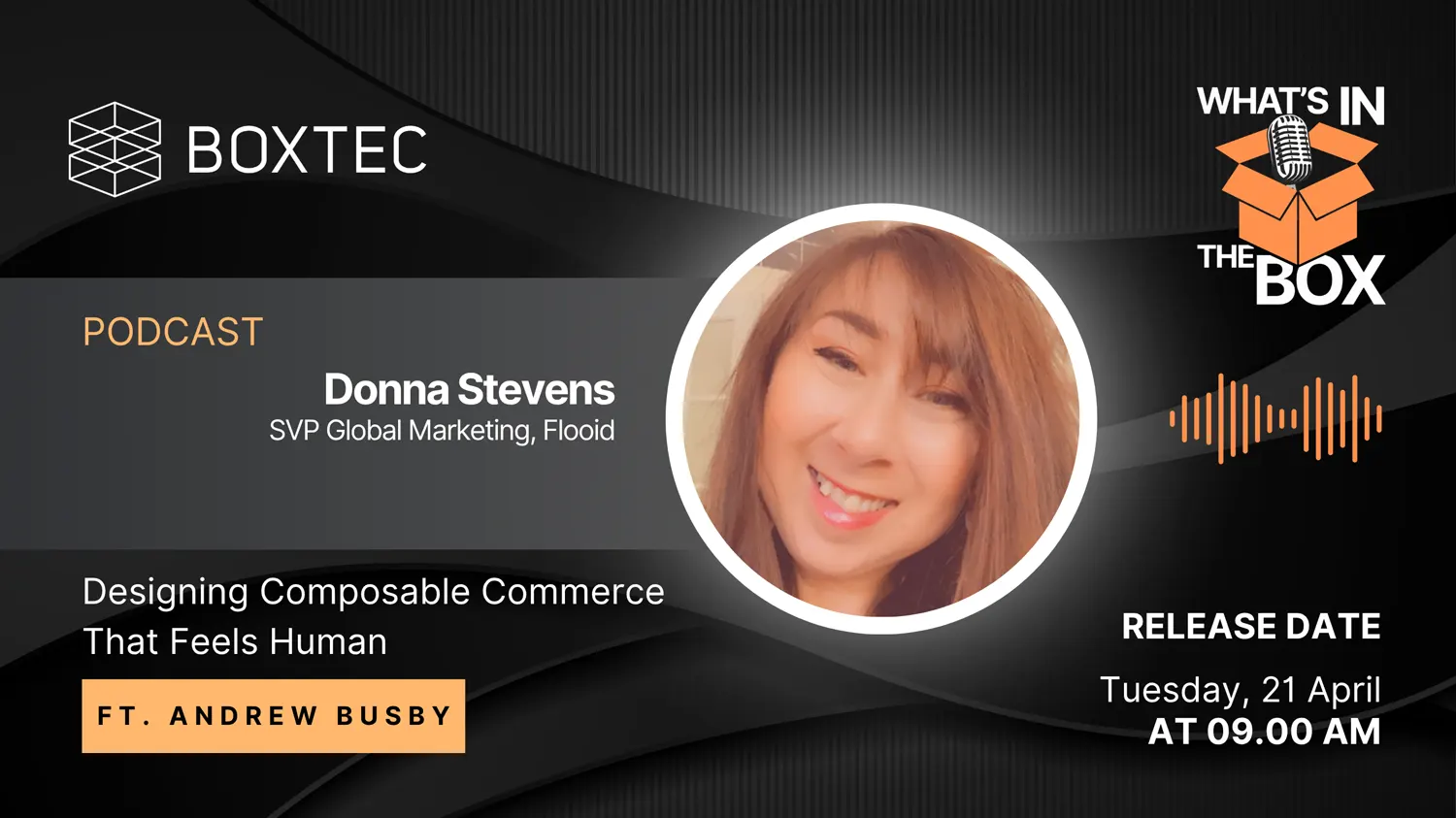
Retail tech shouldn’t feel like an add-on strapped to a counter. It should feel like the store itself. We sit down with Donna Stevens, SVP Global Marketing at Flooid, to unpack what “POS made personal” really means when you centre people — shoppers and associates — alongside the brand voice that makes a store memorable.
Donna takes us inside Flooid’s composable, unified commerce platform and shows how configurability becomes a strategic lever. From micro front-end patterns that let retailers tailor UI and journeys, to extensions that add loyalty enrolment, richer product data, and flexible payment options, the aim is clear: design experiences that staff actually love to use and customers instantly trust. We explore real-world contrasts, like why self-checkout can thrive even in luxury environments when it matches the brand’s standard of service, and how thoughtful prompts outshine generic menus.
Loss prevention gets a much-needed rethink. Instead of blunt alerts and awkward interventions, Donna explains how pattern-based analytics and AI readiness can guide smarter, context-aware decisions at the lanes. The goal is to protect margins without making honest shoppers feel like suspects, and to equip attendants with confidence, not just notifications. This is where the human touch matters; keep dignity, reduce friction, and intervene only when it counts.
We also dig into the “tyranny of the box”, a reminder that hardware costs multiply across stores and quietly shape strategy. Donna argues for software-led value that scales, connecting innovations like smart carts and cashierless zones to a stable core platform. AI, she notes, will fade into the background like electricity — useful, expected, and everywhere — so the real test is whether systems observe, learn, and adjust in service of people and brand.
Want to keep learning with us? Subscribe, share this episode with a retail pro who cares about experience, and leave a review with one change you’d make to your checkout journey. Your ideas help shape the next conversation.
Transcript
Host: 00:03
Welcome to What’s in the Box, the brand new podcast brought to you by BOXTEC, powering retail with purpose.
Host: 00:11
BOXTEC delivers innovative and market leading customer engagement solutions that turn business ideas into a performing reality. From design and integration to ongoing support and maintenance, we’re with you every step of the way. Now, this podcast is a little different to what you might be used to. It’s audio only, and our guests do love that. I say it’s totally unscripted, and this one almost was. We do a little bit of prep for these things. And they’re usually around about 20 minutes. So that’s because, well, we’re busy, our guests certainly are, and we’re sure you are too. So let’s get right into it. My guest today is the Senior Vice President of Global Marketing at Flooid, who deliver unified, composable commerce platforms for omnichannel retailers. She leads global marketing strategy and works closely with products, services, partners, and customers to align Flooid’s roadmap and messaging with evolving retail needs. She joined Flooid, then PCMS, in 2019 and advanced through senior product leadership roles, including Group Vice President Product Management and Senior Vice President Product and Marketing, before focusing fully on global marketing from 2024. Previously, she spent nearly two decades at NCR in senior roles across self-service, point of sale, and interactive retail technologies, following consulting and e-commerce positions at Anderson Consulting, Lonia Worldwide, and Georgia Pacific. It’s a great pleasure to welcome Donna Stevens to What’s in the Box. Welcome, Donna.
Donna Stevens: 01:57
Thank you so much for that lovely intro Andrew. It’s a pleasure to be here.
Host: 02:02
Oh, thank you. Okay, I’ll say these are about 20 minutes, so we’re going to get straight into it. And yes, we were just talking a little bit beforehand. Tell us a little bit about Flooid and what you’re doing now. I said global marketing, but tell us a little bit about that, first of all.
Donna Stevens: 02:26
Yes, sure. So Flooid are actually a Glory company. We were purchased by Glory a little over two years ago, and are certainly proud to be part of an organisation that has over 100 years legacy and presence in the retail and fintech market. But really, what we do is we are a global software as a service (SaaS) provider of a composable unified commerce platform that is anchored by a suite of point of sale, point of service experiences that help retailers delight and engage with shoppers in their store. We’re very much focused on working closely with our customers to help them to transform their businesses at the pace of retail. We’re excited to be a company that is nimble, flexible, adaptable, and works with iconic retailers around the world in their pursuit of delivering omnichannel experiences, supporting new technology and the benefits that come with that in their stores. But more than ever, we like to think about the people of retail and how we can serve them. And that’s very much what we’ve been focused on the last few years.
Host: 03:47
That’s interesting. The people of retail, and I know you like to make sure that they feel those sort of engagements and you have this thing that you talk about POS made personal. Tell us a little bit more about that.
Donna Stevens: 04:02
Sure. So a lot of times I think when people say personal, or personal engagement, they’re thinking from the shopper’s perspective. At Flooid, we like to think a little more holistically about the retailer themselves, their own employees, their store associates, as well as the shoppers and shoppers to be, or prospective shoppers, that maybe they haven’t won over yet. And when we say personal, we’re thinking about not only a personal understanding of the consumers’ preferences for shopping, how they like to shop, what they put in their basket, how they prefer to pay, whether or not they’re a member of loyalty, demographic considerations, presence considerations, proximity. But also we like to think about the applications and the technology itself in the store. And how do we make that personal for the associate and personal for the brand? Retail is a very competitive market, and retailers are proud about their brands, how they look, how they feel, the experience in the store. And very often, technology is awkward to adapt. And what we’re trying to do is find a way for the retailer to purchase a software product or technology and put it in the store, but configure it in a way that becomes part of that whole experience, which builds loyalty for the shoppers and also helps retain labour, which is another big challenge. So it’s very much about POS made personal for the cashier, the cash manager, for the self-checkout associate who’s monitoring the lanes, as well as for the store manager and then all of the shoppers in the store.
Host: 05:52
That’s quite interesting, because for me, I mean, I’ve been with BOXTEC now for about 18 months. And one thing that I’ve observed is that when we talk about POS or self-service and so forth, back in the day, years ago, it that was what it was. It was the till, it was a checkout, and that was it. But now it seems to me, and just the other day we had somebody in who’s interested in looking at what BOXTEC does, and we got into a conversation very similar to what you just described about how it has to all fit in with the store. This is a luxury retailer in London, and it forms the customer experience and the customer journey.
Donna Stevens: 06:40
It does, it absolutely does. It goes beyond just colours and logos, right? Colours and logos are important, you know, at the self-checkout, the accent of the voiceover that nudges you along through your shopping journey. But it’s also about other options throughout that journey. How do you, for example, enable someone to enrol in a loyalty program to get benefits that perhaps they’ve not gotten before? How do you offer them alternative payment journeys or options that suit their way of paying, or preference, or ability to pay for their purchases? How do you reward them? How do you offer additional information perhaps on a particular product or the ingredients in a product, or mated or substitution products with that product? So it’s all about thinking through that experience and what that individual really needs to feel like this journey is personal for them. We’re very lucky in the world of software, we’re much easier to adapt than hardware. You know, we’re more ha-ha “Flooid”! For us, we build into our solution and understanding that technology on its own, without an understanding of people and process, has very limited success. It may be slow to get adopted, it may even be sabotaged in some cases, or ignored. And if you really think holistically about the processes around bringing that technology into the journeys the retailer wants to offer, as well as the ability for the people to engage and interact with that technology, that’s how you ensure that those solutions really are meaningful and impactful in the store, and aren’t just cool tech for cool tech’s sake.
Host: 08:35
No, absolutely. And on this podcast and What’s in the Box a couple of months ago, I had Paul Reed, a customer of BOXTEC, from Harrods, and he was talking about the journey that they went on with us and specifically the self-service, self-checkout. And of course, you think of Harrods, an iconic store, and you think, well, you wouldn’t have self-service, self-checkout in Harrods. That’s all about personal and so on and so forth. But, if people are familiar with the food hall there, it fits very well. So absolutely. I just wanted to go back to what you were saying about POS made personal, and what you were saying there. Maybe you could just share with us a little bit about what this means for Flooid, and also perhaps what you can share about your vision and plans for Flooid in the space.
Donna Stevens: 09:33
Sure. So I think to your first question, being a technology or software technology company, we always have to be thinking about what’s next. Where is retail going to be in 2035? And how do we have a roadmap that is informed by trends, technologies, and demands, not just today, but in the future? And how do we use new tech like AI in a meaningful way? So it’s not just this wow, cool thing, but it’s actually bringing real benefit to the retailer. One of the things we’ve done recently is look at our endpoint experiences ourselves, check out our Point of Sale, and think about how a retailer could configure that journey to offer their own unique experience within their store. And we’ve built some capabilities into our solution. Without getting super nerdy and techie on the podcast here. I will just say it’s a way for a retailer to take the software that we provide to them and extend it themselves, configure it, make the look and feel and engagement suitable to the way they operate and how they want that engagement to exist within their stores. So we’ve built some mechanisms using what are called micro front-end patterns into our software as part of that. In addition, we’ve thought about the challenge, and I did a piece actually with the Independent a couple years ago on loss prevention and the challenge of shrink in the retail market. It’s a tough topic, and it’s a challenge. And we’ve thought a lot about the fact that, you know, there’s great technology out there, but it only addresses half the problem. It looks at what’s happening, it looks at the behaviour of either the cashier or the consumer, and it tries to draw a conclusion. Well, that’s missing some of what’s happening underneath the surface. So we’ve looked holistically at what can we do to help the associate not only control loss, but also ensure the engagement is optimal for the shopper. How do you combine loss prevention with excellent customer experience and avoid putting a store associate in a position where they are uncomfortable? Again, it’s all about the people. These are human beings in jobs. We’re not in the world of robots where AI and robotics have taken over everything. There are still people there. How do we use technology in a smart way to make those people more productive? So we’ve recently released a new product that is essentially an engine to help the associate better understand what’s happening at the lanes and make a smart decision about how to act on that rather than just alert, trigger, engage, alert, trigger, engage. It’s more thoughtful than that. It’s more data based, it’s more patterns in analytics. And yes, of course, being AI ready and harnessing the power of AI to learn, iterate, and adjust proactively to be smarter and more intelligent as a solution. So we are working toward that end as well. We’ve done some other updates within our platform to really open it up to new innovations, like smart carts and cashierless checkouts, and to extend, integrate and bring partners to the table that retailers can learn from and consider how to build a best of breed ecosystem in their stores as well. So it’s all about thinking about the uniqueness that every retailer brings to market. How do they remain relevant? How do they differentiate themselves from the competitor? And how do they build loyalty with their stoppers? And what can we build into our software that is innovative, but also helps to bring real value, and a measurable return investment to that retailer?
Host: 13:33
Yes, absolutely. You mentioned AI there a number of times. I guess now we can’t have a retail conversation without AI. And I just wonder, do you think in maybe in a couple of years’ time or so we won’t be talking about AI, because AI will be, just as we don’t talk about all the wonders of electricity, or the internet, or the whatever it happens to be. AI will just be in everything that we get. But your point is really interesting in terms of we need to automate, and we need to make it easier both for the customer and the store associate, but we also need to retain the human element. I mean, there’s one or two grocers in particular, I won’t name them here, but to exit the self-checkout area you need to scan your receipt barcode, or it might be a QR code, to get out. Now, here in the UK, I know you’re based on the east coast in the US, people are starting to feel a little bit of resentment to this because they’re like, oh, you’re treating us as criminals. And kind of think, well, some of you are, stop doing it! But I guess it’s a really fine balance that retailers have got to try to find around this.
Donna Stevens: 15:03
It is, it comes right back to that word personal and, you know, really understanding each of the individuals, both the associates and the shoppers in the store. And I think you’re absolutely right about AI. I mean, five, ten years from now, it’s not going be something we even talk about. It’s just something that just is, it exists, yes, it’s part of everything. But if we think about what is AI really, you could make the argument that artificial intelligence is software. It’s a decision made by something that is not a human being. It’s intelligence in code, in hardware and physical things that aren’t human beings. So, in fact, maybe it is already ubiquitous because of software and hardware. It’s existed in older forms for many, many years, and now it’s just becoming more clever, becoming more complex, and we’re finding new ways to adapt this basic fundamental principle of observe, learn and adjust, with software and hardware. And I think that’s it’s cool, it’s fun, it’s exciting, it’s a little scary, a little creepy at times, but I’m excited to see where it goes and how we at Flooid, as well as at Glory and with our sister company, Acrelec, can harness the power of artificial intelligence to help our customers be more productive, and to channel their efforts in ways that build loyalty and make the shopping experience more engaging and joyful for their customers.
Host: 16:48
Yes, absolutely. Now you and I, Flooid and BOXTEC, we both love stores. Yes, that’s a given. But before I let you go, you said something to me before we started recording, which I thought was great. We need to make sure that we kind of clarify this pretty quickly. But you said that it’s all about, it was a quote from somebody, and you’ll tell me who. It’s all about overcoming the “tyranny of the box”. Now, tell me about that, and I’ve got to say that we don’t mean is BOXTEC!
Donna Stevens: 17:19
No, no, we don’t!
Host: 17:22
So tell me a little bit about that.
Donna Stevens: 17:24
Credit where credit is due. It was a quote from a gentleman named Brian Kilcourse from RSR Research here in the United States, another analyst company that Flood works closely with. And what he meant was, retail stores have to work harder than ever because when consumers choose to get up off their couch and come into the store, and not shop online, they have a lot of expectations and demands. Equally, there is a cost that the physical infrastructure of a store carries. If you think about just the smallest component, a mouse or a printer in a store, and then you multiply that out times the number of lanes, times the number of stores, you very quickly come up with this giant number that started out so small and seemed so insignificant. This is what he meant by the “tyranny of the box”, right? This really dictates so much of a retailer’s cost, a retailer’s environment, the problems and challenges that they have to address and where their budget gets allocated to spend and invest. And they really need to overcome that tyranny in order to be able to break out and be creative and leverage software solutions and their people, and things like AI and robotics, of course, in a smart way, in a cost-effective way. And it’s always a balance, right? It’s always hard to get the decision made about where you’re going to spend your money. I know CTOs, CIOs, wrestle with this problem. We certainly hear it from many of our customers and prospects. Where do you where do you allocate budget? It’s tough. This is tyranny. And what we do at Flooid is we try to help our customers find a way to solve their problems wisely and effectively with the solutions we offer, and to think about how they can deliver value to their shareholders, and also build customer satisfaction and loyalty with software. And that’s our job. Help them as a partner, as a trusted valued partner, to solve these problems and see their way through all of the tyranny and all the costs that they have to deal with every day to get creative, to break out, to disrupt and innovate, but also be practical about how you do that. So you’re picking the right things to do.
Host: 19:57
Yes, absolutely. Okay, so just to round off, to finish off, because I just want to very quickly talk about conferences and expos, because I know that you go to an awful lot. I thought I went to a lot, but we’re recording this mid-February. By the time this goes out, you would have already been to Dusseldorf to EuroShop. And if you survive that, I know that that’s five days of hard work. We’re going be seeing each other, I know, at the Retail Technology Show at Excel in London, April 22nd and 23rd, and I will be recording another one of these podcasts very soon with Matt Bradley, the organiser, a director, so that’ll be good. So both Flooid and BOXTEC, are going be there. Where else can people, not just from the UK, but our listeners around the world, where else can they see Flooid if they want to find out more about what you guys are up to?
Donna Stevens: 20:56
Yes, absolutely. So, of course, yes, we will be at EuroShop in Düsseldorf, we’ll be at Retail Tech later in the year in North America, we will be at NACs, the show for convenience and fuel. We always make our way there as well as we will be at NRF in Singapore in Asia. We also are engaging in Australia and New Zealand with retail doctors. So we have some presence and offices there. Anywhere people want to engage with Flooid, certainly our office in Birmingham in the UK, and in Cincinnati and Chicago in the United States. But equally, we encourage people to follow us on LinkedIn. We do a lot of work to make sure we post meaningful, fun, exciting content in LinkedIn. So we encourage people to come find us there. We have a YouTube channel, a lot of really great video content that we’ve recently put out there. Come and see us at Flooid.com. We’ve recently refreshed our website and added some new content on some of the new and exciting products that we’re offering to the market. And, you know, we welcome anyone to drop an email to marketing at Flooid as well. And we’re happy to connect and engage. So, we always love to meet new people in the retail community and engage and talk about ourselves because who doesn’t love doing that?
Host: 22:22
Yes, absolutely, totally agree. Well, listen, we’re out of time, but thank you so much, Donna. That was really great to talk. We always have a good conversation when we get together and talk about retail. So that’s all from What’s in the Box for now. New episodes will be dropping every two weeks, so please stay tuned. And if you want to find out more about BOXTEC, well, also Flooid, you know where to go to find out more about Flooid. But if you want to find out more about BOXTEC, please follow the link in the description. Thank you so much for listening and thank you, Donna.
Donna Stevens: 22:54
Thank you, Andrew. It was a pleasure.