Published: 23 November 2026
For years, businesses deploying self-service kiosks, POS systems and digital touchpoints have faced a frustrating dilemma.
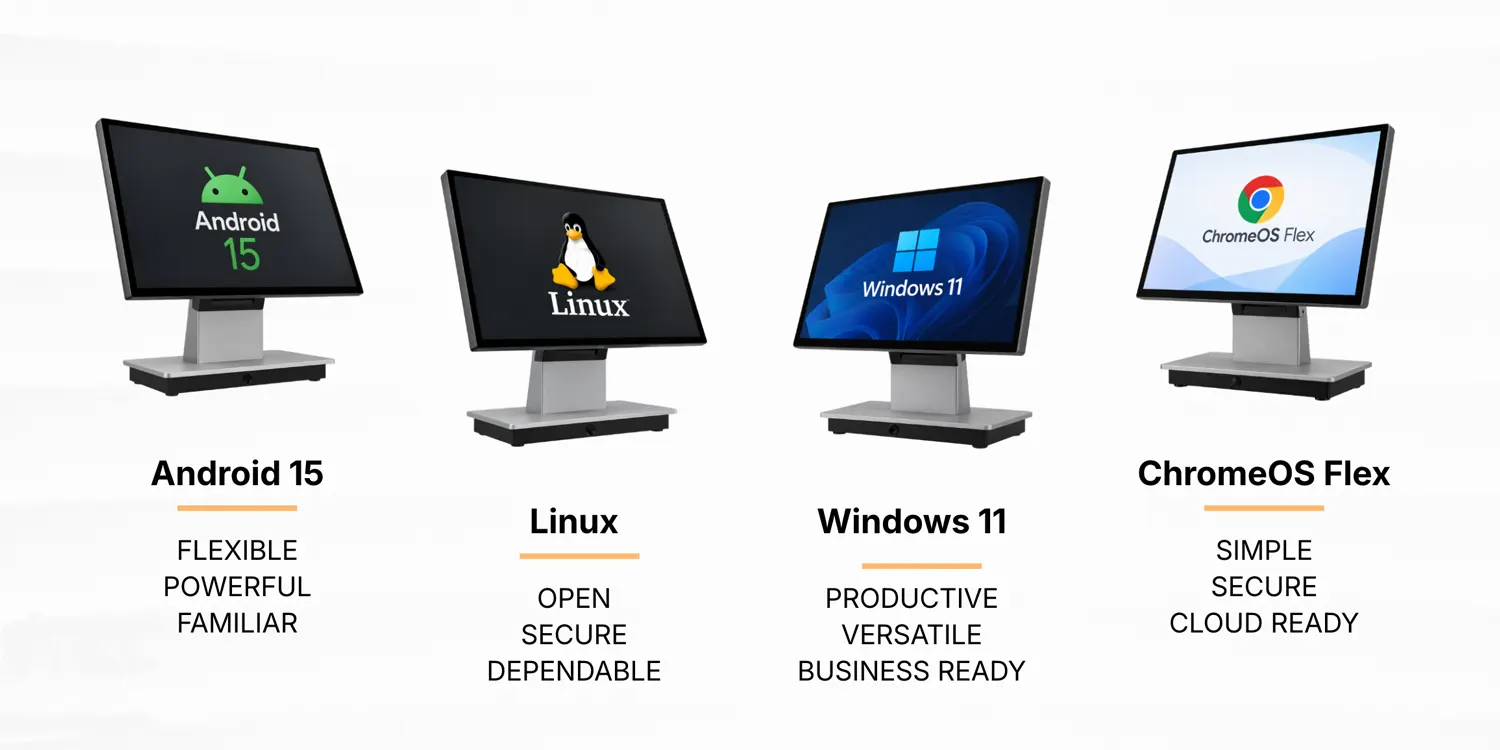
Many of today’s innovative customer-facing applications are being developed for Android. At the same time, a significant proportion of retail and enterprise estates continue to operate on Windows or Linux-based hardware. The result is often a compromise. Businesses are forced to choose hardware based on operating system requirements rather than selecting the solution that best meets their operational needs.
At BOXTEC, we believe organisations should never have to make that choice.
The Problem with Operating System Lock-In
Historically, hardware deployments have been closely tied to specific operating systems.
If an organisation selected Android software, they would typically need Android-specific hardware. If they chose Windows, they would deploy Windows hardware. If they chose Linux, they would often require a completely different deployment model and management strategy.
While this approach may work initially, it often creates challenges further down the line.
Technology evolves. Business requirements change. New software platforms emerge.
Suddenly, what seemed like the right decision three years ago becomes a limitation.
Replacing an entire hardware estate simply because a business wants to adopt a different software platform is costly, disruptive and difficult to justify. Yet this scenario remains remarkably common across retail, hospitality and self-service environments.
The Rise of Android in Hospitality & Self-Service
One of the biggest shifts we’ve seen in recent years is the growth of Android as a preferred development environment.
Many hospitality, retail and self-service software vendors now build their solutions primarily for Android. Developers appreciate the flexibility, deployment speed and cost efficiencies the platform can offer. As a result, Android-based applications are becoming increasingly common across ordering, self-service, queue management and customer engagement solutions.
However, many organisations still operate Windows or Linux-based infrastructure and procurement strategies. This creates a disconnect between software innovation and hardware deployment.
The question businesses should be asking is not:
“Should we choose Android, Windows or Linux?”
Instead, it should be:
“How can we ensure our hardware supports whatever comes next?”
Liberating Android from the Tablet
One challenge many organisations face is that Android applications are often designed initially for 10″ tablets or small handheld devices. While these form factors can be effective in limited scenarios, they can introduce challenges at scale, including battery management, limited screen size, restricted connectivity options and reliance on Wi-Fi or Bluetooth communications.
In many deployments, tablets were never designed to be permanently mounted, customer-facing retail devices operating day after day in demanding environments.
At BOXTEC, we enable businesses to take existing Android applications and move them beyond the constraints of consumer grade tablets and handhelds. Our platform allows Android software to be deployed across retail-hardened form factors including dedicated 6.5″ handheld devices, 11″, 15″, 22″ and 27″ touchscreens.
With mains powered operation, USB connectivity, wired networking options and purpose-built mounting solutions, organisations can transform an Android application into a scalable, enterprise ready solution with little or no redevelopment effort. The result is a more reliable, more manageable and more deployable platform that maintains all the benefits of Android while overcoming many of the limitations associated with consumer hardware.
